About the course, errors and residuals, my first iterative method, sparse matrices
 Iterative and Multigrid Methods
CS556 — Fall 2026
| Class Time | Monday/Wednesday, 11:00 a.m.–12:15 p.m. [Catalog] |
|---|---|
| Class Location | 1214 Siebel Center for Computer Science |
| Class URL | go.illinois.edu/cs556 |
| Instructor | Luke Olson |
About the Course Lectures Homework On Attendance Mental Health and Wellness
Do you have a large, sparse matrix or graph problem that you'd like to solve? Then this course is for you!
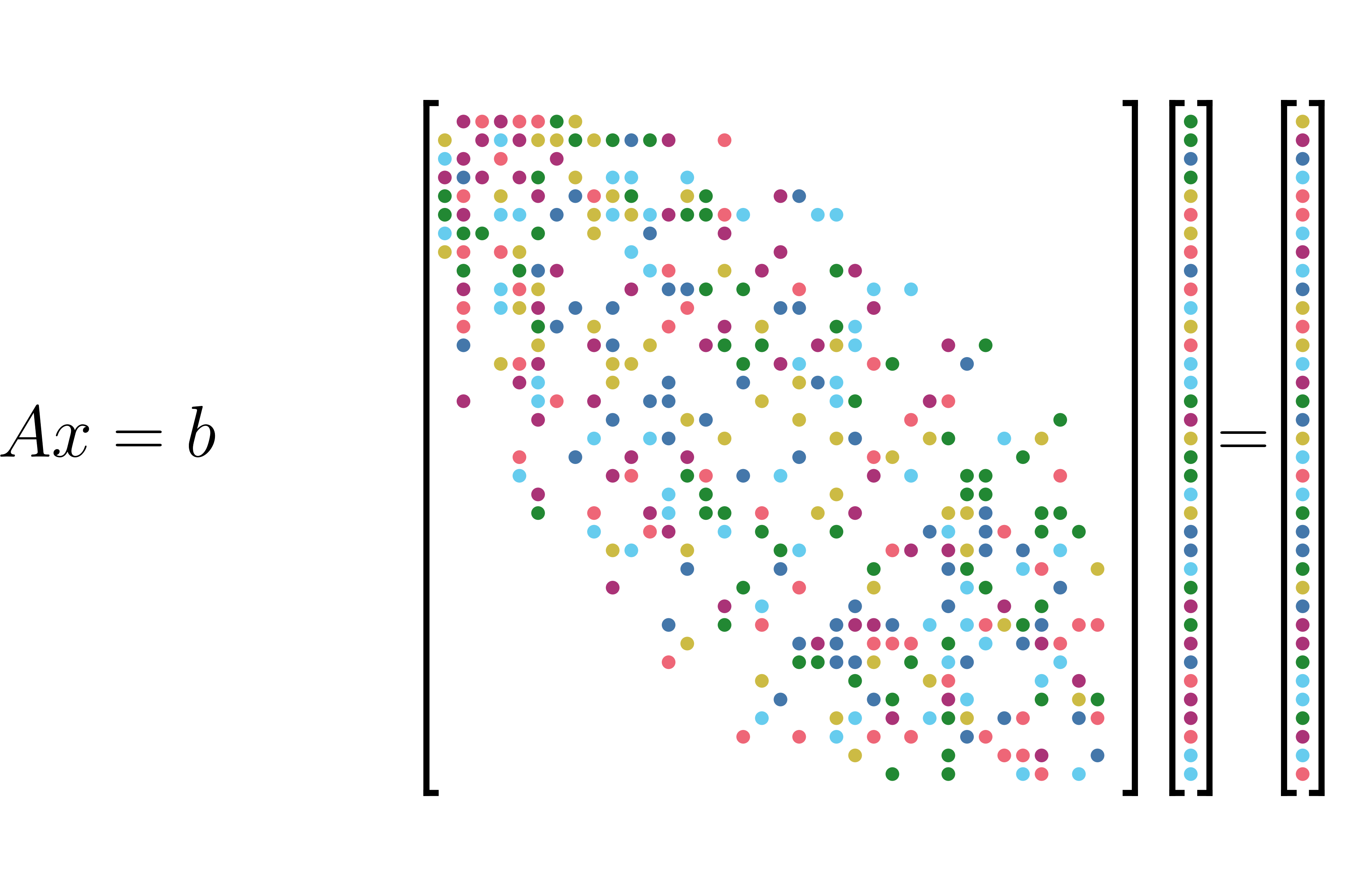
The course covers roughly three topics: the fundamentals of numerical linear algebra, iterative methods (such as CG and GMRES), and multilevel methods (for example, geometric and algebraic multigrid).
The course involves homeworks and a final project. There is also a strong participation grade based on your attendance (informal) and ability to keep up with handouts and other tasks. The tentative grade breakdown is:
This will be finalized by the first week of class.
The final project will be built over the last half (approximately) of the semester.
The goal of the project is to investigate deeply a specific aspect of multigrid and iterative solvers in a direction that we have not fully covered in class. The project must be on solvers (not discretizations, not the application, etc) — most often there should be a PDE or ODE or numerical method/model driving the core exploration.
Multigrid for XYZ, other preconditioners, domain decomposition topics, etc are all good topics. You may (and should!) connect this with your own research if you can. Solvers + AI is another possible direction, but should be chosen carefully.
The project is a solo effort. There will be regular updates (see below). Be prepared to present updates!
A presentation will serve as the final. The length will be 15 minutes, which includes questions. So target something around 12-13 minutes in presentation length.
Presentations are in class on December 2, 7, and 9.
| Step | Points |
|---|---|
| prj00: selecting a topic | 3 |
| prj01: outline and goals | 3 |
| prj02: setup and initial results | 3 |
| prj03: challenges | 3 |
| prj04: slides draft | 3 |
| prj05: final slides | 10 |
| Final presentation | 20 |
| Final presentation peer feedback | 5 |
| Total | 50 |
Steps prj00–prj04 are graded on completion.
The final slides (10 points) are graded on:
Final presentation peer feedback (5 points): for each presentation you attend, answer "What is one takeaway that you had from this presentation?" in a Google Form. Write each takeaway in the positive form. The takeaways are shared with each presenter.
You are expected to attend all three days of presentations (December 2, 7, and 9). Exceptions are made for illness or school-related commitments.
The course homeworks and examples in class will be in Python. In particular, we will use the sparse features in SciPy and the solvers in PyAMG.
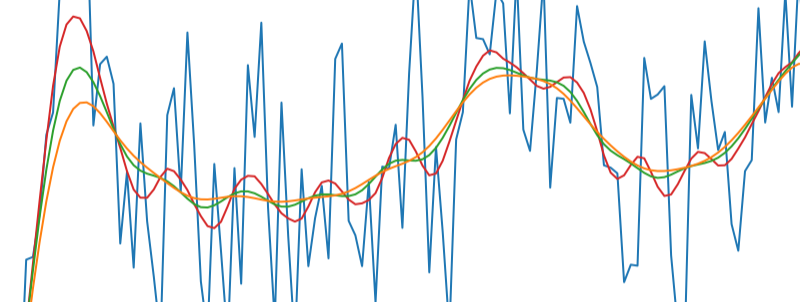
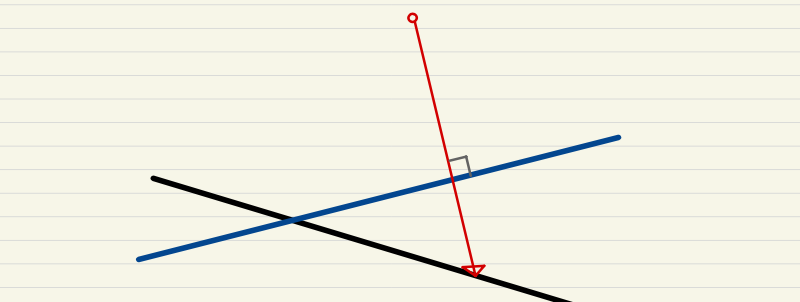
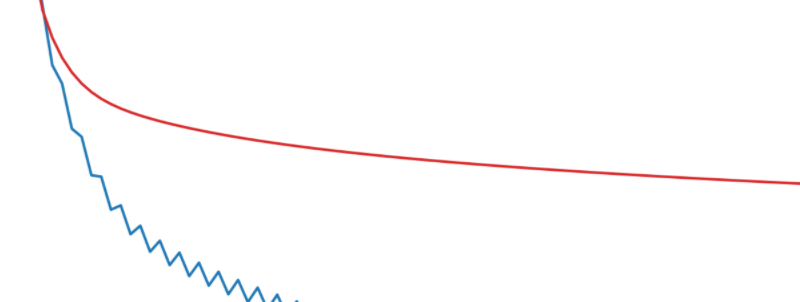
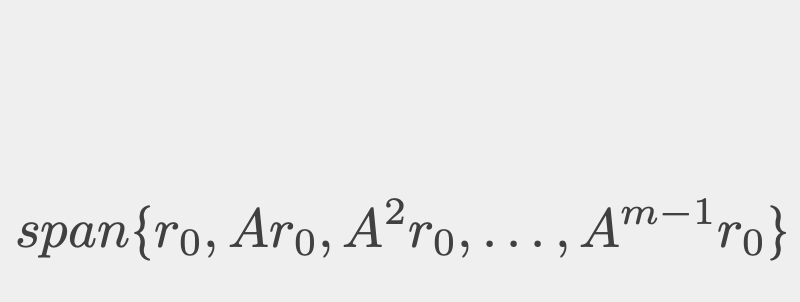


 IPYNBmg-03-smooth-error.ipynbIPYNBmg-04-coarse-modes.ipynbIPYNBmg-05-interpolation.ipynbIPYNBmg-06-multigrid-two-level.ipynbIPYNBmg-07-multigrid-two-level-matrix-form.ipynbIPYNBmg-08-multigrid-v-cycle.ipynb


We will be using Saad's book Iterative Methods for Sparse Linear Systems
In addition, there are several other helpful texts (optional):
If you have cold-like symptoms or otherwise do not feel well, please stay home.
Missing class because you are ill will not affect your grade, and I will work with you to cover the material, over Zoom if that helps.
Significant stress, mood changes, excessive worry, substance/alcohol misuse or interferences in eating or sleep can have an impact on academic performance, social development, and emotional wellbeing. The University of Illinois offers a variety of confidential services including individual and group counseling, crisis intervention, psychiatric services, and specialized screenings which are covered through the Student Health Fee. If you or someone you know experiences any of the above mental health concerns, we strongly encourage you to contact or visit any of the University’s resources provided below. Getting help is a smart and courageous thing to do for yourself and for those who care about you.
Adapted from the statement approved by the University of Illinois Counseling Center.